There Comes a Time When We Must Come Together
Part III: For His People’s Sake
A Thanksgiving RESET Reflection on Gratitude, Generational Stewardship, and Building Beyond Ourselves
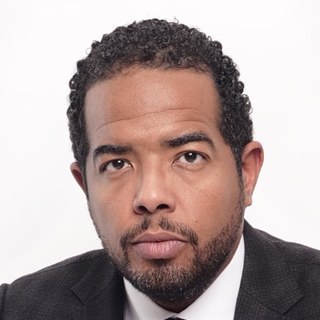
Reginald Lee Bachus
November 26, 2026 · 9 min read
“And David perceived that the LORD had established him king over Israel, and that he had exalted his kingdom for his people Israel’s sake.”
Over the last two days, I have reflected upon the preparation of David, the consequences of division in biblical Israel and the maturity required of both leaders and people to usher in a different season.
On this Thanksgiving morning, I want to conclude this three-part reflection by drawing attention to what I believe is one of the most significant observations in the biblical account of David’s ascension to the throne.
David understood why God had established him.
And it was not simply for David’s sake.
David Perceived
I appreciate the language of the biblical text.
David perceived.
After all the years of preparation, rejection, displacement, uncertainty and adversity, David recognized two things that I believe every person entrusted with leadership, influence or responsibility must eventually come to understand.
First, he recognized WHO had established him.
Second, he recognized WHY God had established him.
David could have attributed his success to his military accomplishments, strategic abilities, relationships, popularity or perseverance.
Yet, David recognized the hand of God in his journey.
And perhaps equally important, he recognized that what God had done in his life was connected to what God desired to do in the lives of others.
Sometimes, we become so preoccupied with what God is doing FOR us that we fail to recognize what God desires to do THROUGH us.
Building Something Beyond Ourselves
What makes this biblical account even more fascinating is that Solomon was not yet born when the elders of Israel came to David at Hebron.
Solomon did not personally experience the years of displacement, rejection and division that his father endured before becoming king.
He was born into a kingdom that his father had endured considerable hardship to establish.
Furthermore, according to 1 Chronicles 22:9, God had specifically promised David that Solomon would be a man of rest and that Israel would experience peace and quietness during his days.
But David did not simply leave Solomon a kingdom.
When David learned that he would not be the one to build the temple, he did not abandon his commitment to its construction.
Instead, he began preparing abundantly for Solomon to accomplish what he himself would not be permitted to accomplish.
In 1 Chronicles 22:14, David makes a statement that particularly resonates with me:
“Now, behold, in my trouble I have prepared for the house of the LORD…”
In my trouble.
David did not wait until all his circumstances were favorable to begin preparing for the next generation.
He committed resources, assembled materials, organized people, imparted wisdom and even contributed from his personal wealth toward the construction of something he would never see completed.
He was willing to invest in something for which someone else would receive much of the recognition.
How many of us possess that level of maturity?
How many of us are willing to invest our time, energy and resources in something from which we may never personally benefit?
There is a difference between preparing for your own success and preparing for the success of a generation that will outlive you.
The Long View of Generational Stewardship
As I reflect upon the present condition of America and much of the world, I cannot help but wonder where we could be if more of us embraced this understanding of stewardship.
So many families, communities and nations are under-resourced, financially challenged and increasingly vulnerable to circumstances beyond their immediate control.
At some point, we must recognize that our collective selfishness will not deliver us from our collective challenges.
Our preoccupation with our immediate wants and desires can come at the expense of our long-term security, stability and prosperity.
What if we became more intentional about pooling our resources, sharing our knowledge, building institutions, strengthening our communities and preparing the generations coming behind us?
What if we measured success not exclusively by what we were able to acquire during our lifetime, but also by what others were able to accomplish because of what we did during our lifetime?
Where could our families be?
Where could our communities be?
Where could our nation be?
Solomon inherited not only the benefits of his father’s accomplishments, but also the wisdom, resources and preparations necessary to build upon them.
There is a difference between leaving the next generation an inheritance and preparing the next generation to steward that inheritance.
We must become intentional about both.
Preparing to Build from Here
Over the last several months, I have become increasingly intentional about preparing myself, my family and others for the uncertainties of the future.
I do not know precisely what the coming years will bring.
But I do know that difficult seasons do not affect everyone in the same way.
If circumstances become increasingly challenging, there will be those who struggle even more, while others who heeded wisdom, exercised discipline, prepared and learned to work together may be better positioned not only to endure those challenges but to emerge stronger than ever before.
Preparation does not guarantee that we will escape adversity. Nor does experiencing hardship necessarily mean that someone failed to prepare.
But preparation can significantly influence our capacity to respond, recover and rebuild.
And our responsibility cannot simply be to position ourselves among those who survive or prosper while remaining indifferent to those who struggle.
What good is our preparation if we have not also considered how we might help others?
David’s preparations were not exclusively for David’s benefit.
They were for Solomon, for the people and for something that would extend beyond David’s lifetime.
Perhaps some of the things God is taking us through are intended to ensure that the generations coming behind us will not have to go through the same things.
A Thanksgiving Challenge
Today, as we gather around our Thanksgiving tables, we will thank God for our families, homes, health, provisions and the opportunities He has afforded us.
And we should.
But I want to encourage us to take our expressions of gratitude one step further.
What are we doing with what God has entrusted to us?
Who is benefiting from our blessings besides us?
What are we preparing today that someone else will be able to build upon tomorrow?
During our recent family readiness conversations, one of the observations that resonated with many of us was that we are often the very people others call in times of crisis.
That realization carries with it a responsibility.
Some of our families need to begin pooling resources.
Some need reconciliation.
Some need to begin transferring knowledge and wisdom from one generation to another.
Some need to discuss how they will collectively care for their elderly, their children and their most vulnerable family members.
My Thanksgiving challenge is simple.
Before we leave the table today, let us identify at least one thing we can do together that will leave our families stronger, better prepared or more united than they were when we arrived.
Let our gratitude produce something tangible.
For His People’s Sake
Over these three days, we have seen David refuse to seize the kingdom prematurely, refuse to use his ascension as an opportunity to settle old scores and ultimately recognize that God had established him for the sake of others.
And even after recognizing that someone else would build the temple, David prepared abundantly.
What a lesson for America.
What a lesson for the Church.
What a lesson for our families.
What a lesson for me.
As I reflect upon my own journey this Thanksgiving morning, I am grateful not only for the things God has given me, but also for the experiences through which He has taken me.
Even the difficult ones.
My prayer is that I will never become so consumed with my own aspirations that I lose sight of the people I have been called to serve, or the generations coming behind me.
Perhaps one of the greatest demonstrations of gratitude is not simply what we say to God about what He has given us, but what we do for others with what He has given us.
There comes a time when we must come together.
Not simply to address the challenges of today, but to build something that will benefit those who will inhabit tomorrow.
May our gratitude be expressed through our generosity, our faith through our service, and our blessings through our willingness to become a blessing to others.
Happy Thanksgiving to you and your family.
Read the Complete Three-Part RESET Reflection
- Part I: While God Was Preparing David — November 24, 2026
- Part II: Hasn’t It Been Long Enough? — November 25, 2026
- Part III: For His People’s Sake — November 26, 2026
This concludes our three-part RESET Reflection drawing upon the biblical account of ancient Israel. This series is not a commentary on the modern State of Israel or contemporary Middle Eastern conflicts.
Respect. Educate. Serve. Efficiency. Transparency.
RESET.
- Faith
- Leadership
- Gratitude
- Stewardship