Faith, Leadership & Community
Too Broke to Fix It. Profitable Enough to Buy It.
When systems fail, who pays—and who gains?
Reginald Lee Bachus
November 15, 2026 · 9 min read
In this article · 6 sections
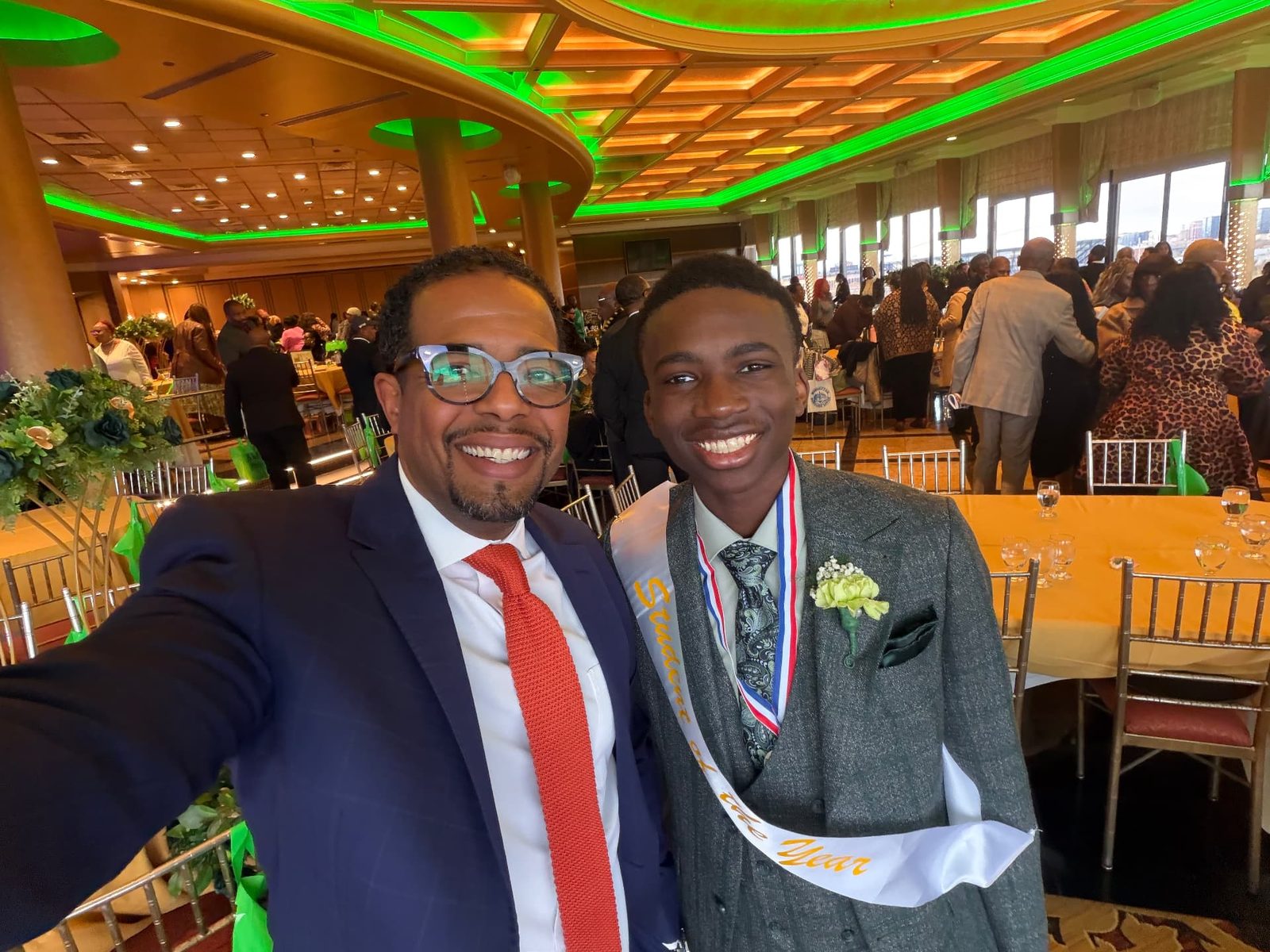
On Saturday, my godson Christian was being honored for his high school years, academic achievements, and accomplishments in life.
It was a moment to celebrate what our young people have done and who they are becoming.
But another moment brought home the consequences of this week’s air travel disruption.
Through an iPhone, I watched a daughter’s tears as her mother was being honored. The daughter, a second-year student at Hampton University and a previous recipient of the scholarships and awards being celebrated, could not be there because the flight disruption had left her stuck.
She had to experience that moment through a screen.
We hear “ground stop,” “communications failure,” and “travel delays.” Behind those words are people trying to be present for one another.
Who missed a best friend’s wedding? Who could not reach a loved one’s funeral? Who missed a milestone that will never happen again?
These failures have real consequences.
Those consequences fall especially hard on people who cannot afford another ticket, an unexpected hotel stay, a rental car, or another day away from work.
1. A backup plan requires resources
I often say, “Build it before you need it.”
But we also have to ask who has the means to build a backup plan.
Household preparedness matters. So does the reliability of the institutions our households depend on.
We cannot keep asking people to become more resilient without demanding that the systems serving them become more reliable.
Friday’s nationwide aviation ground stop followed a communications failure. By Saturday, travelers were still dealing with cancellations and delays.1
What happens after such a failure deserves our attention, too.
According to Reuters, the administration sought $30.1 billion for aviation improvements before the outage. Afterward, Transportation Secretary Sean Duffy called for $50 billion. Congress had previously approved $12.5 billion for modernization and controller hiring.2
Our air traffic control system needs reliable equipment, qualified people, and sustained investment.
The public also deserves answers.
What explains the increase? What would the additional money purchase? Who would receive the contracts? Who would independently verify that the work was completed and the system became more reliable?
The timing warrants scrutiny. It does not establish that anyone manufactured the failure.
An emergency should strengthen accountability.
There is also a separate policy discussion worth understanding. The FAA manages air traffic control; TSA handles passenger and baggage screening.
The Congressional Research Service reports that the administration’s proposed TSA budget anticipates privatizing screening at more airports as part of its staffing changes.3
Purchasing equipment, contracting out operations, and selling public assets are different arrangements. Each deserves examination on its own terms.
But the questions follow the money: Who controls the service? Who carries the risk? Who gets paid? What happens when the arrangement fails?
2. Relief today can carry a price for generations
Consider Scranton, Pennsylvania.
In 2016, Pennsylvania American Water purchased the Scranton Sewer Authority’s wastewater system for approximately $195 million. It served about 31,000 customers in Scranton and Dunmore. The company assumed responsibility for environmental improvements estimated at $140 million.4
There were real needs to address. Keeping public ownership would also have required investment.
But consumer advocates challenged the transaction, and a dissenting utility commissioner warned about costs falling on the company’s existing customers. Supporters argued that the transaction would address infrastructure obligations and benefit customers.5
The question communities must ask is straightforward:
When a government receives a payment, who ultimately finances it?
Years later, affordability remained a concern. In July 2024, Scranton reported that regulators approved additional water and wastewater rate increases. The city also described residents’ testimony about financial strain and service problems.6
Those increases alone do not establish what bills would have been under continued public ownership. They do demonstrate that selling a system does not settle the question of affordability.
The repair bill does not disappear when ownership changes.
Neither does the household paying the monthly bill.
Chicago offers another warning.
In 2008, the city leased approximately 36,000 parking meters for 75 years in exchange for $1.157 billion.
Its inspector general subsequently estimated that the payment was $974 million below the system’s value to Chicago if the city had retained it under the same operating terms. The report criticized the rushed process and inadequate public review.7
Seventy-five years.
One generation of officials can make a budget decision that binds residents who were not yet born when the agreement was signed.
These arrangements are widespread, although they take different forms. An ICMA survey conducted in 2017 found that 80 percent of responding local governments used private providers for some services.8
That included nonprofits as well as businesses. It was not a count of cities selling their assets or a measure of today’s privatization activity.
We should be precise about the numbers—and serious about the consequences.
3. A community can lose its foothold while its property gains value
As a pastor, I cannot discuss this without thinking about church property.
I also come to this as someone involved in New York real estate since at least 2015, when I had to step up and become CEO of Abyssinian Development Corporation.
That experience shapes the questions I ask when a community is told it cannot afford to maintain something another party considers valuable enough to acquire.
I understand that buildings require money.
Roofs leak. Boilers fail. Insurance, repairs, and financing have to be paid. Faith and historical significance do not erase those obligations.
Black churches, Catholic parishes, and congregations across denominations carry these pressures.
A congregation can be property-rich and cash-poor.
Then someone arrives with money.
Church property is already privately owned, so its sale differs from government privatization. But financial pressure can create a similar imbalance between those who need immediate relief and those positioned to benefit over time.
Sometimes a sale funds a congregation’s next chapter. Sometimes redevelopment preserves ministry and creates needed housing.
Sometimes, however, the community loses something the purchase price never fully measures.
In Boston’s South End, the former home of Concord Baptist Church, a historic Black congregation that relocated to Milton, became luxury condominiums. In February 2026, a penthouse in that building was listed for nearly $8 million.9
Nearby, the former Holy Trinity German Catholic Church became a luxury condominium development called The Lucas.
Generations had worshiped, married, and mourned there. The church had also housed programs serving homeless people and at-risk youth. Former parishioners described the pain of losing a place woven into their family histories.10
These examples do not establish developers’ profits or prove that selling was the wrong decision.
They do force us to consider what survives.
The architecture may remain while the community’s access disappears.
Stained glass becomes a selling point. A sanctuary becomes a luxury interior. A congregation’s history becomes part of the atmosphere marketed to people who can afford its next chapter.
What happens to the people who sustained the first one?
Our parents and grandparents contributed to building funds. Members cooked dinners, held fundraisers, repaired fellowship halls, and gave from paychecks that were never large.
They built places to worship, organize, mourn, celebrate, and find help.
When those properties change hands, does the congregation retain a place? Does the neighborhood gain housing its residents can afford? Who shares in the future value?
Longtime residents can watch their neighborhood become more desirable and less accessible to them.
They walk past expensive coffee shops and beautifully restored buildings while struggling to afford the place they helped hold together.
The injury is being priced out of belonging.
4. A street sign should remind us to continue the work
On Saturday, I also joined in celebrating the street naming honoring my dear brother, the Rev. Clinton Miller of Brown Memorial Baptist Church.
On Sunday, November 15, I am scheduled to preach the church’s anniversary service.
I first met Clinton when I was a student at Yale Divinity School. But it was through the fight for community equity and participation in the Atlantic Yards development surrounding Barclays Center that we first began working together.
As we celebrated him, I remembered his tireless insistence that the people already there deserved a meaningful voice in the future being built around them.
His advocacy is part of the public record.
In 2012, he helped lead clergy demanding local jobs and affordable housing. Brown Community Development Corporation later joined the organizations behind a 2014 agreement establishing affordable housing deadlines and additional oversight, including locally appointed directors.11, 12
At the time, Clinton spoke about the need for “a fair process, community inclusion and benefits for hard-working Brooklynites.”12
Those words still belong in this conversation.
Now people will walk past a street sign bearing his name in a Brooklyn profoundly different from the one I came to in 2011.
I am grateful his name will be visible.
But will the principles he fought for remain visible in the decisions being made?
Will longtime residents participate? Will working families benefit? Will people who sustained the neighborhood have a meaningful place in its future?
A street sign can preserve a name. Continuing the work requires decisions.
5. Rising costs do not create equal hardship
People ask a reasonable question: Why do our taxes and bills keep increasing while our institutions keep struggling?
There is no single explanation.
Expenses can rise faster than revenue. Temporary assistance can expire while recurring obligations remain. Infrastructure wears out. The National League of Cities identifies expiring pandemic assistance, infrastructure demands, and rising costs among the pressures confronting municipalities.13
But residents deserve an accounting.
How much supports workers and maintenance? How much pays debt, financing costs, administration, and investor returns? What alternatives were considered?
We ask households to account for every dollar. Public officials and public contractors should expect the same scrutiny.
We should also ask where financial power is concentrated.
A New York Times analysis identified approximately $474 million in Elon Musk’s disclosed political contributions since January 2025, with federal records extending through October 14, 2026.14
That money is separate from a public infrastructure budget. Nor did every dollar support a losing candidate.
But the scale should make us pause.
One person can deploy nearly half a billion dollars toward shaping political outcomes while communities struggle to finance essential services.
For a family barely making rent, rising prices may determine whether the lights stay on.
For someone with enormous financial resources, financial distress elsewhere may create opportunities to acquire assets and expand influence.
Costs can rise for everyone while the consequences remain profoundly unequal.
That is the danger I see in concentrated wealth gaining both political influence and control over necessities: people with limited alternatives can become dependable sources of revenue without gaining a meaningful voice.
Private investment can contribute expertise and resources. Public ownership also requires competent management.
Every arrangement should demonstrate how it serves the people who depend on it.
Before transferring control, show residents the long-term cost.
Before promising savings, explain who saves.
Before surrendering future income, explain what the next generation receives.
Build it before you need it
This weekend, these questions had faces.
Christian, being recognized for his accomplishments.
A daughter at Hampton University, watching her mother’s recognition through an iPhone.
My dear brother Clinton, whose name will mark a street in a community he fought to help shape.
These experiences remind me that infrastructure, ownership, and public policy determine whether people can show up, remain connected, and retain a place in the communities they love.
Readiness requires reliable institutions alongside prepared households.
Build the infrastructure. Build the oversight. Build the financial knowledge, partnerships, and negotiating strength to protect a community’s choices before a crisis narrows them.
People with the fewest resources often have the least room to absorb a failure—and the fewest options when someone else names the price of the solution.
If we are too broke to maintain what we have, why is it valuable enough for someone else to buy?
And after the deal closes, will the people who paid for it still have a place?
- Public Accountability
- Community Ownership
- Church Property
- Infrastructure
- Readiness
Sources and further reading
- 1.
- 2.
- 3.
- 4.
- 5.
- 6.
- 7.
- 8.ICMA: “Managing Tight Resources: Alternative Service Delivery in Local Government.” (opens in a new tab)
Summarizes ICMA’s 2017 Alternative Service Delivery survey. Its “private” providers include nonprofit organizations as well as businesses.
↩ Back to text for source 8 - 9.
- 10.
- 11.
- 12.
- 13.National League of Cities: “City Fiscal Conditions 2026 Release.” (opens in a new tab)
An event page describing the upcoming release of the City Fiscal Conditions 2026 report, not the report’s findings.
↩ Back to text for source 13 - 14.Theodore Schleifer, The New York Times, via The Philadelphia Inquirer, November 2, 2026: “Elon Musk tests what nearly half a billion dollars can buy in the midterms.” (opens in a new tab)
Covers disclosed contributions since January 1, 2025; federal records run through October 14, 2026. Not every dollar supported a losing candidate.
↩ Back to text for source 14