Open Letter
A Positive Open Letter to America
After a historic election night: America’s conscience, Mississippi, my grandfather’s “political miracle,” and the work that comes next.
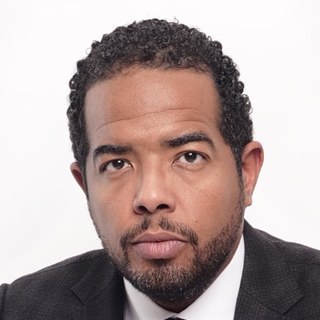
Reginald Lee Bachus
November 4, 2026 · 13 min read
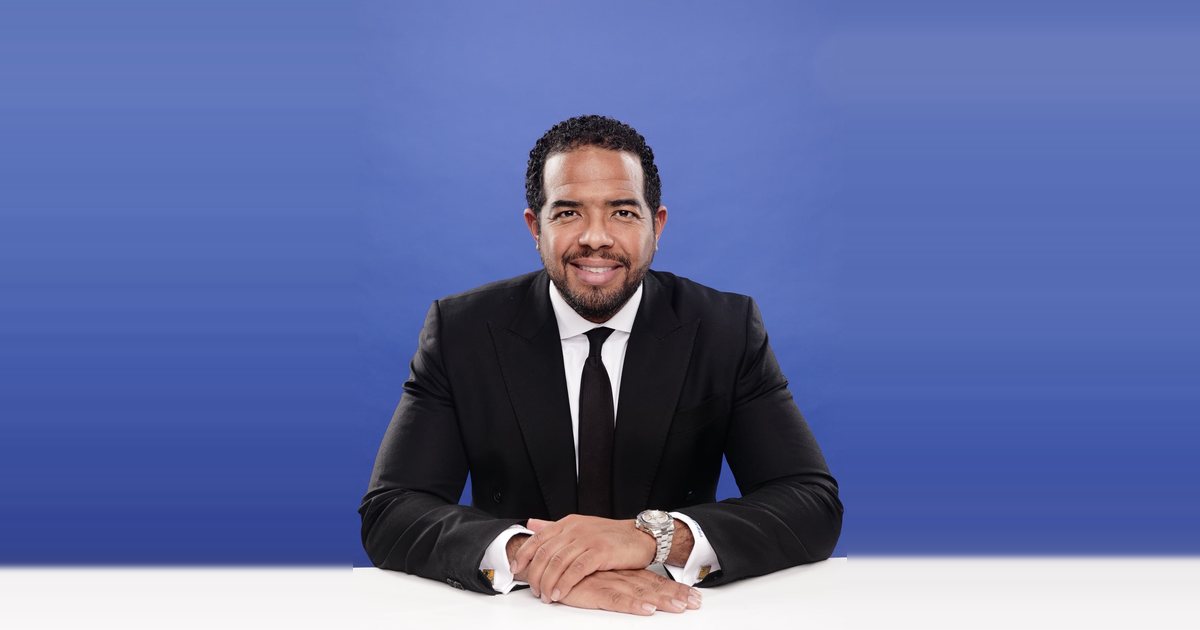
Last night, I watched the returns with tears in my eyes.
Deep inside, I held an abiding belief that there was still something good in the soul of this nation.
That America had a conscience that could reach beyond conservative or liberal, red or blue, North or South, East or West. A moral grounding that would dare to ask: What is best for our American democracy? What is best for our people? What kind of country are we leaving our children?
This was a win for America.
Whether it becomes a lasting win for Democrats depends on what they do next.
A candle in the darkness
Over these last two years, I have wrestled with difficult questions about humanity. Even before I speak as a Bible-believing, Jesus-following Christian, I speak as a human being who has struggled to understand our capacity to lie, steal, and inflict suffering on one another.
There were moments when my hope felt no stronger than a single candle flame in a sea of darkness.
But the faithful hand of God kept guiding me toward other candles. Other lamps. Other people whose light reminded me that darkness was never the whole story.
Last night, I saw those lights shining across this brave and complicated country.
Questions America deserves answered
I believed America’s conscience could still be pricked by dishonesty, hypocrisy, the abuse of power, and the treatment of human suffering as somebody else’s problem.
To my eyes, our country had been left reeling, our fragile democracy on the ropes, with the whole world watching.
Americans deserve answers about Epstein. They deserve transparency about presidential pardons, political influence, government contracts, and the intersection of public power and private business—including business interests in the Middle East.
Questions are not proof. Allegations are not verdicts. But public office carries a responsibility to answer legitimate questions, disclose conflicts, and submit to scrutiny.
Who is being protected? Who is profiting? And who is paying the price?
I am tired of watching ordinary people carry the costs of powerful people’s decisions. Tired of families bearing the burdens while others collect the benefits. Tired of war being discussed as strategy by people far removed from its suffering.
America’s conscience spoke back
Last night, I believe America’s conscience spoke back.
The disenchanted. The disenfranchised. Those tempted to surrender to despair. People recognized their agency and activated the most powerful force in our democracy:
We. The. People.
Mississippi made it personal
And for me, Mississippi made it personal.
Around 1:35 a.m. Eastern, I felt something in my spirit that I am still discerning: Pay attention to Mississippi. Do not rush past what this means.
My family’s roots run through Hernando, Mississippi. My grandfather is a retired Baptist pastor in Kansas City, Kansas. I am a third-generation Baptist pastor in Brooklyn, New York. Next year, he turns 90.
When we talked about what we were witnessing, he said, “I just can’t believe it. It’s a miracle—a political miracle.”
Imagine hearing that wonder in your grandfather’s voice. A man approaching 90, who has lived through so much of the history we read about, still watching America do something he could hardly believe was possible.
Mississippi is the birthplace of my paternal grandparents. It is a place where Black Americans were murdered for trying to exercise the very right we watched people exercise last night.
Now a Black man, Scott Colom, stands within reach of a United States Senate seat.
The race remains too close to call. At 9 a.m. Eastern on November 4, reporting showed him ahead by just 43 votes.
Forty-three.
Whatever the final outcome, do not tell me your vote does not matter.
Texas, and 158 million reasons
And if you need another reminder, look at Texas. Reporting traced $158 million in Elon Musk’s donations through the Senate Leadership Fund to a PAC supporting Ken Paxton.
That is 158 million reasons to believe those votes mattered.
He put up the money. The people still had the final say.
No lie can live forever
I thought about the generations between my grandparents’ Mississippi and this Mississippi. The fear. The sacrifice. The faith it took to believe something could change when everything around you insisted it never would.
Then came the words of America’s preacher-prophet, Dr. Martin Luther King Jr.: “How long? Not long, because no lie can live forever.”
His conviction that the moral universe bends toward justice was never permission to sit back and wait. He spoke to people who had marched, sacrificed, organized, and insisted that America confront its conscience.
Last night reminded me why we must keep doing the same.
The ballot box is one place where America gives voice to its conscience. And, like our individual consciences, it is not beyond failure, mistake, distraction, or deception. Those of us who are Christians ought to understand that conviction does not make us incapable of being wrong.
But neither does being wrong make us incapable of correction.
You can redraw the lines, but you cannot erase the people. You can build political walls around a seat, but the people inside those walls still have a voice—and a way of reminding you that the seat belongs to them.
The larger picture
Look at the larger picture.
Georgia elected a Black woman named Keisha Lance Bottoms governor. Wisconsin elected David Crowley, a Black man, governor, alongside Democratic majorities in both chambers of its legislature.
Texas elected James Talarico to the United States Senate and Gina Hinojosa, a Latina, as governor. Kansas elected a United Methodist pastor, Adam Hamilton, to the United States Senate. Democrats also won Senate seats in North Carolina and South Carolina.
New Mexico elected Deb Haaland, a member of Laguna Pueblo, who will become the first Native American woman to serve as a state’s governor. And a shout-out to Governor Wes Moore—one of ours—reelected in Maryland.
Democrats won majorities in the House of Representatives and the Senate, along with a majority of the nation’s governorships.
But look beyond the party count. Look at the backgrounds, the experiences, the different roads to leadership. Look at more of America’s rich tapestry reflected in those entrusted to govern it.
Representation alone does not guarantee good government. But it can widen our understanding of who belongs at the table—and who is capable of leading it.
Places people said could never change, changed. Walls people thought could never be penetrated came tumbling down.
Lessons from election night
What should we learn?
Good candidates matter. Strategy matters. Organizing matters. Messaging matters. Energizing the electorate matters. Speaking to the issues that actually move people matters.
Be careful about declaring any community unreachable or any state permanently possessed by a political party.
I say that as a 43-year-old Black man born in Kansas, with roots in Texas and Mississippi, and chapters of my life written in Illinois, Connecticut, and New York.
My education has taken me from an HBCU to an Ivy League institution to a predominantly white law school. Ministry has taken me into communities large and small across this country. My work has taken me beyond its borders.
I have listened to people whose lives, politics, and circumstances look very different from my own. And I remain convinced: there is still good in people.
Even in a world that profits from promoting evil, division, and hatred, we cannot lose sight of that.
Am I expecting “Kumbaya” from coast to coast? No. I’m a New Yorker; even “Knicks in five” requires some faith.
But political assumptions have been shattered. There is room for constructive conversations where people once assumed the door was closed.
The people’s agenda
What might we discover if we stopped asking only which party people belong to and started asking what kind of life they are trying to build?
A future for their children. Dignity for their parents. A little peace in their homes.
Enough money for groceries and gas. The possibility of working hard without working two jobs and a side hustle and still coming up short.
Truth that can be trusted. Neighbors who can be counted on. Leaders who see human beings before they see political opportunities.
And peace—because whatever governments declare about victory, families burying their children know that everybody loses something in war.
That is the people’s agenda.
That is what I endorse.
Not a blanket endorsement
My joy is not a blanket endorsement of Democrats or every item on their agenda. Under these new circumstances, what remains to be seen is how they will turn campaign promises into governing priorities.
Whose needs will come first? Whose voices will shape the decisions? What will the American people actually feel changing in their lives?
For too long, corporate money and greed have had too much power to write the agenda for the rest of us. Is it any wonder people have rejected both parties, rejected the system, or questioned whether participating would make any difference?
To me, this election was people giving that system the finger—and insisting that their lives, their needs, and their futures belong at the center of the conversation.
The politics of fear, hate, and division met people still willing to believe in love, hope, and a better America. An America that can move forward together instead of backward separately.
Now comes the test
Now comes the test.
Democrats, what will you do with the power entrusted to you?
It is time for everyone to put on their big-boy and big-girl pants and come to the table.
Politics requires compromise. Governing requires maturity. Leadership requires the ability to hold more than one responsibility at a time.
Democrats and Republicans in the House and Senate must be prepared to work with President Trump wherever they can advance the interests of the American people—and oppose him where principle, evidence, or the public good requires it.
The standard must be the people’s welfare.
Can you negotiate a useful agreement while conducting necessary oversight? Can you pursue accountability without turning every day into another episode of political revenge? Can you distinguish the work that belongs in a committee room or a courtroom from the work a struggling family needs done at the kitchen table?
If President Trump sees himself as a dealmaker, bring him serious deals that improve people’s lives. Make the case that helping the American people is worthy of his attention and his legacy.
Will our dislike for a politician speak louder than the cries for relief that came from schools, community centers, and polling places on November 3, 2026?
Will we repeat the retaliatory tactics we condemned—or be the grown people in the room and handle the people’s business?
Do not let forces inside or outside your party pull you into endless infighting, where the rhetoric gets louder and the relief gets further away.
People need solutions that relieve pressure today without creating a bigger crisis tomorrow. They need leaders who can explain what they will build, how it will work, and how it will help.
Beyond the battlefield
And all of us need to resist turning every disagreement into another battlefield.
Abortion. Same-sex marriage. The rights of transgender Americans. Race. Religion.
These are serious matters affecting real people. No election makes anyone’s dignity disposable or anyone’s rights unimportant. Nor does one election settle every argument about why people voted.
But I believe this moment demands that we stop treating division as a substitute for governing.
As I have asked in my conversations and reports: What happens when someone feels strongly enough about an issue to attend a rally but cannot afford the gas to get there?
Their conviction still matters. So does the empty tank.
We must be capable of addressing both.
Speaking plainly as a Christian
Let me speak plainly as a Christian.
I believe God gave human beings free will. My responsibility is to live my faith faithfully, share it honestly, and demonstrate it through how I treat people.
If I believe the gospel has transforming power, I ought to trust that power enough to bear witness through my life. I cannot substitute control for discipleship or coercion for conviction.
Jesus instructs us in Matthew 5:16 to let our light shine through good works that bring glory to our Father in heaven. That calls me to examine the witness of my own life.
I do not have to agree with every choice you make. You do not have to affirm every belief I hold. But neither of us should have to surrender our dignity or equal citizenship because we disagree.
No one should be bullied, threatened, or financially intimidated into professing a belief they do not hold. At the same time, freedom of conscience cannot become an excuse for harassment, humiliation, or denying another person equal treatment. And disagreement does not exempt any of us from criticism.
A gay neighbor does not have to share my theology to deserve safety. A Christian does not have to abandon religious conviction to respect a gay neighbor’s rights.
The promise of life, liberty, and the pursuit of happiness belongs to both of us.
My concern for unborn life is real. So is my responsibility to the woman facing a difficult pregnancy, the family without support, and the child who needs care after birth. Conviction ought to move us toward compassion, practical help, and sustained responsibility.
Violence or hatred directed at someone because they are gay, transgender, Jewish, Muslim, Black, Asian, or otherwise different is unacceptable.
Human dignity cannot depend on whether the person standing before us belongs to our group.
Christians do not have to fear treating people with love. Jesus calls us to love even our enemies, to do good, to bless, and to pray for those who mistreat us.
If that is our calling toward our enemies, surely we can practice decency toward our neighbors.
Who wins?
And then we need to ask:
Who wins when we are divided?
Who wins when Black Americans and Muslim Americans are encouraged to see one another as threats?
Who wins when a struggling white worker is taught to resent an educated Black professional—or a struggling Black family is encouraged to blame Jewish neighbors for an economy neither family controls?
Who wins when fingers are pointed while hands and stomachs remain empty?
Who wins when the red and blue of our political parties matter more than the red blood spilled on our streets?
Who wins while our children are lost, frightened, and fighting one another—and the adults keep fighting over who gets the microphone?
At the end of the day, who wins?
Follow that question. Follow the attention. Follow the money.
“United we stand, divided we fall” warns us what division can cost. It also invites us to remember what still holds us together.
We can disagree without destroying one another. We can correct our course without abandoning our country. We can insist that the soul of America is worth fighting for—and that our neighbors are worth reaching for.
Relief people can feel
Do the necessary oversight. Establish the facts. Follow the evidence wherever it leads. But let the American people see—and feel—you working on what is hurting them.
Here is my serious prediction: if Democrats spend this political capital on endless political combat while families experience no relief, they will squander this moment.
People need help paying the rent, filling a prescription, keeping the lights on, and putting food on the table.
Stop the bleeding in our households. Stop the pillaging of our communities. Loosen the heavy handcuffs of corporate control that leave people feeling their government belongs to everyone except them.
Give people a reason to believe their lives can get better—and then do the work to make it happen.
Follow the money on both sides
And follow the money on both sides.
Elon Musk’s spending could not secure every outcome he sought. But Democratic victories do not mean money has lost its grip on our politics.
AIPAC. MAGA-aligned groups. Democratic super PACs. Billionaire donors. Ask the same questions of all of them: Who paid? What did they want? Whose interests will our leaders serve?
Political spending is not, by itself, proof of corruption. But voters deserve to know who is financing campaigns and whether access to government is being distributed according to wealth rather than need.
The people’s sovereignty is sacred. It must never become a product the highest bidder believes they own.
Build the bench
We also need to widen our understanding of who can serve.
Pastors. Plumbers. Farmers. Teachers. Everyday Americans who recognize a need and answer the call because public service is a responsibility they are prepared to carry.
Find those people. Prepare them. Support them. Build the bench before we need it.
Keep your eyes open
And keep your eyes open.
Donald Trump remains president, with more than two years left in his term. His administration still exercises executive power. The newly elected Congress does not take office until January. Winning an election and exercising governing power are different stages of the work.
The war with Iran continues. Israel’s political future remains unsettled. Young Americans challenging our priorities abroad deserve to be heard when they ask whose future those priorities serve.
An election here does not end the suffering or uncertainty elsewhere.
We have new possibilities. We still have serious responsibilities.
That includes encouraging those whose communities did not see the result they hoped for.
To my Floridian friends—and especially those feeling discouraged this morning—choose to be encouraged. Think about the work between Georgia ’22 and Georgia ’26. Let this moment fuel the organizing that makes the next victory possible.
Think #Florida28. Think #Florida30.
It’s time to play chess and put the checkers to the side.
Hope, renewed
For the first time in a while, I can say “I’m proud to be an American” without that same nagging, glaring contradiction between what I deeply believe this country can be and what I am presently experiencing.
Last night, I went to sleep with a smile on my face. This morning, the sun seemed to shine just a little brighter.
I feel hope. I feel renewed expectation. I feel the possibilities opening before us—and the responsibility to help turn them into something people can feel in their lives.
The dream of America has always required people willing to believe beyond what they could presently see.
My grandfather still can.
This morning, so can I.
The people have spoken.
Will our leaders listen?
And will we stay engaged, keep building, and insist that they do?
Rev. Reginald Lee Bachus
#RESET #WeThePeople